






 [פירסום] 20 המפיקים בעלי ההשפעה הגדולה
1. Sam Phillips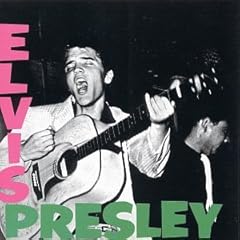
Credits: Elvis Presley, Carl Perkins, Jackie Brenston & His Delta Cats, Jerry Lee Lewis, Roy Orbison
Song: Jackie Brenston & His Delta Cats: Rocket 88
Before we begin, we have to acknowledge Sam Phillips' role in all this, as first rock 'n' roll producer ever. Without Sam Phillips, there would have probably been no rock 'n' roll, at least as we know it. Phillips opened Sun Studio in 1950; "Rocket 88", from 1951, is generally considered by most musicologists as the very first rock 'n' roll song ever (penned by Ike Turner, one of the Delta Cats). What makes it rock 'n' roll was an idea by Phillips. The band had accidently smashed guitarist WIllie Kizart's amp, breaking the speaker cone. It made Kizart's guitar sound like a saxophone. Phillips decided to use the amp, amplify it, and use it as a rhythm track; the song had transformed itself from embryonic r&b to rock 'n' roll. His work with Presley, Perkins, and the others was the very invention of rock too. He was equally at home with blues, r&b, and country; the central ingredients of rock 'n' roll.
2. Rick Rubin
Credits: The Beastie Boys, The Black Crowes, Johnny Cash, Rage Against The Machine, Public Enemy
Song: The Beastie Boys: Fight For Your Right
For sheer provocation, Rubin deserves mention. As a producer, he's one of the most distinctive, managing to bring out the heaviest metal sounds which he's always bridged with a dynamic rap/hip-hop sensibility. On the side, he rescues fading veterans with a "cut the crap" approach, usually taking a back-to-basics approach, and highlighting an upfront drum or the rhtyhm inherent in acoustic guitars. For overall influence, he's right up at the top of the list with anyone.
3. Brian Eno
Credits: Talking Heads, U2, Devo, Ultravox, James
Song: Talking Heads: Once In A Lifetime
Brian Eno might not be the greatest rock producer, but his credits include some pretty notable albums, and his years as a musician, with Roxy Music, Robert Fripp, and solo, have given him a very distinctive approach to the music. His distinctive marks include keyboard textures that give albums like The Unforgettable Fire and Remain In Light their unifying character; he usually highlights percussion, favoring the polyrhythmic, and he's a firm believer in ambience; electronic or otherwise. He has always kept withing distance of the musical cutting edge, as a producer, performer, and intellect.
4. Butch Vig
Credits: Nirvana, Smashing Pumpkins, Soul Asylum, Sonic Youth, Garbage
Song: Nirvana: Come As You Are
Drummer Butch Vig forever changed the face of rock with his production job on Nevermind, which took an osbscure, rough-sounding, punky-hillbilly sounding indie group and turned them into a gigantic, riff-heavy, heavy and jagged meteorite of hard rock encapsulated in pure crystal. Purists, like Nirvana themselves, claimed after the fact that Vig wasn't true to Nirvana's sound, but why should he have been? Nevermind is a great sounding record, and Siamese Dream and equally good affirmation of his essential style. He favors mountains of loud, layered guitar texture and an almost clinical clarity of sound, in which ever nuance is noticeable, regardless of the volume. Vig, after these early production successes, started performing as well, as drummer for Garbage.
5. Daniel Lanois
Credits: Brian Eno, U2, Peter Gabriel, Bob Dylan, Martha and the Muffins
Song: U2: A Sort of Homecoming
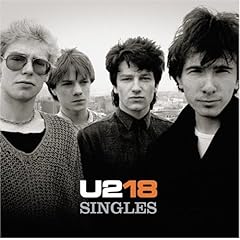
Lanois came up via Martha and the Muffins, a Canadian band his sister played bass in. Brian Eno discovered him and invited him to co-produce U2's The Unforgettable Fire in 1985; the two have frequently collaborated since. Lanois is also an accomplished guitarist, pedal steel player, and dobro player; he's released a number of interesting solo albums. As a producer, he's not dissimilar to Eno, except that he makes a point of employing more organic sounding instrumentation on many of his recordings in the service of a vaguely dreamscape-like sound. He most recently worked with dashboard Confessional.
6. Jerry Wexler
Credits: Aretha Franklin, Wilson Pickett, Sam & Dave, Ray Charles, The Drifters
Song: Sam & Dave: Soul Man
If greatest producer can be chosen on the concept of best sounding records, Jerry Wexler has to be right up there. Wexler is best known for his years at Stax, where he largely was responsible for the gritty, horn based Stax soul sound. However, his influence dates all the way back to the mid 1950's at Atlantic Records, when he worked with Ray Charles and the Drifters. As a producer, he liked grit; he encouraged Charles to raunch it up a little, and his recordings at Stax emphasized the soul of the horns and vocals without overloading the productions with Spector or Motown style walls of sound.
7. George Martin
Credits: The Beatles, Paul McCartney, America
Song: The Beatles: Being For The Benefit of Mr. Kite
Often called the fifth Beatle, the title isn't too far off the mark. What made the Beatles great was the complexity of their music; given the fact that none of them could read music, this was a real achievement. Martin was the difference; he explained to the lads what could and couldn't be done on records, he carried out some of their more whimsical ideas, and came up with a few of his own. "Being For The Benefit of Mr. Kite" is one of many wild experiments. A Lennon song, its intensely psychedelic swirly sounds in the instruemental break is a tape of a circus calliope, sliced into pieces, tossed into the air, and spliced together however they fell, including backwards and upside-down. He didn't do much after the Beatles (America provided income, and the work wasn't very challenging); Paul McCartney brought him in to produce a couple of early 80's albums.
8. Phil Spector
Credits: The Ronettes, The Shirelles, The Angels, The Beatles, the Ramones
Song: The Ronettes: Be My Baby
Given his biography and current events, there's not much one can do with Spector but shake their heads with regret. He had a hit as member of the Teddy Bears in 1957 with "To Know Her Is To Love Her" and was a millionaire producer before he turned twenty. His patented Wall of Sound involved using dozens of musicians and singers on a recording, filling every nanosecond with layers of sound, including instruments meant to be "felt, not heard". As a sound, it is truly grandiose, as any of the early 60's pop hits he produced will attest, perhaps the greatest is the Ronettes' "Be My Baby". The sound was out of style by 1966; kids wanted rock. Spector's work was erratic ever since; his contribution to the Beatles' Let It Be, John Lennon's Imagine, and The Ramone's End Of The Century were his only significant credits since.
9. Brian Wilson
Credits: The Beach Boys
Song: The Beach Boys: God Only Knows
While the passage of time makes it seem unlikely now, Brian Wilson was once at the cutting edge of music, and was in direct competition with the Beatles in defining state-of-the-art production technique in the 1960's, after Phil Spector's sound went out of fashion. Deaf in one ear, Wilson produced things in mono, which gives the Beach Boy's mid-60's records a surprisingly rich sound when compared to some of their contemporaries (including the Beatles in the U.S.), who were mixed for fake "processed" stereo. Wilson was a painstaking overdubber, and would find music in anything, from wind chimes to an old shoe. Pet Sounds will stand as the purest testement to his genius; the tapes to his orchestral, overdubbed, sound-effect laden follow-up, Smile, were famously destroyed in 1967 when Sgt. Pepper beat him to the punch; he descended into a decades-ling battle with mental instability in its wake.
10. Jimmy Miller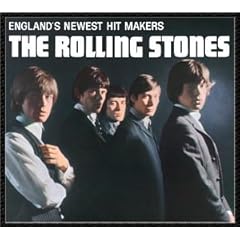
Credits: the Rolling Stones, Traffic, Spencer Davis Group, The Plasmatics, Motorhead
Song: The Rolling Stones: You Can't Always Get What You Want
Miller was also a percussionist, and often played drums himslef on his recordings; with the Rolling Stones he drums on "Honky Tonk Women" and provides the oomph to the drums on "You Can't Always Get What You Want". As such, his productions always highlighted the drums and percussion, and he'd add more when needed. He encouraged jamming; Traffic (and the Stones, with Mick Taylor) began to stretch out at his suggestion, and insisted on good playing. Unfortunately a heroin addiction got him fired after Goat's Head Soup and claimed his life in 1994. He worked little after that; The Plasmatics and Motorhead were among his only credits. "You Can't Always Get What You Want" which even name drops him, is his masterpiece.
11. Chris Thomas
Credits: Sex Pistols, Procol Harum, Badfinger, The Pretenders, Roxy Music
Song: Sex Pistols: Pretty Vacant
Chris Thomas got his first taste of production working as an engineer on the Beatles' White Album, in 1968. From that great resume-starter he eventually had as much of a hand in creating new wave and punk as anyone. He produced art-rockers Roxy Music in the 70's as well as power-pop legends Badfinger, and then wound up at the controls for Never Mind The Bollocks, Here's The Sex Pistols. Given the explosive nature of the group, it is remarkable how well he recorded them; the album stands as testimony to the band's greatness, largely via Thomas' efforts to make sure things were recorded right, and knowing what needed to be there and what didn't. Simplicity is the word best associated with Thomas, even during the art-rock years; his work with the Pretenders showed the Sex Pistols was no fluke.
12. Steve Albini
Credits: The Pixies, The Breeders, Tad, Nirvana, Helmet
Song: The Pixies: Gigantic
Albini doesn't like to be called a "producer", he prefers the term "engineer" which usually refers to the sound guy who's in charge of making sure the equpment is functioning; the producer's right hand man. He makes this distinction because he dislikes the concept of producers leaving their mark; to Albini, recordings should be technically pure, capturing the band as it is, not as a producer hears it. As such, he's the polar opposite of a Butch Vig, which is why Nirvana went with Albini for In Utero. Albini certainly thinks like an engineer; his technique is to have the band play as he places mikes in all directions, capturing them from all angles. He doesn't like separate audio tracks for each instrument; which is conventional production technique.
13. Lee "Scratch" Perry
Credits: Bob Marley, The Wailers, The Clash
Song: Bob Marley: Punky Reggae Party
Lee "Scratch" Perry, the 4 foot 11 inch titan of reggae and dub, belongs on this list for both the influence of his production, which along with the father of dub King Tubby, helped redefine reggae and create dub, and also his reputation as an absolute madman, one he shares with many names on this list. He manned the controls for the Wailers' best recordings beofre they became well known outside of Jamaica in the 60's, and released a countless amount of albums on which he produces and performs. Naturally, reggae beats, and the bass, are given emphasis, and turntable, stereo separation, echo, and other studio tricks are employed to give the music its dense, hallucinatory qualities. The Clash were big fans, and brought him in to produce, but his tracks ultimately weren't used in their produced form; the Clash remixed them to suit their own sound. "Punky Reggae Party" is a Perry/Marley nod to punk rock.
14. George Clinton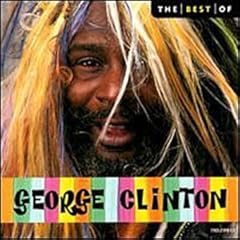
Credits: Funkadelic, Parliament
Song: Funkadelic: The Wars of Armageddon
Clinton's P-Funk empire had more influence on funk than almost any other artist has ever had in their own genre. Creating albums with vast amounts of cast members, Clinton put emphasis on the theatrical implications of music; bizarre sound effects were used, instruments were filtered and distorted, vocals borrowed from Gospel and doo wop and soul sang lyrics wothiest of the sleaziest underground comic, virtuosos playing was encouraged, and above all, the integrity of the funk was maintained; heavy oppressive beats that could get the unfunkiest listener shaking their ass. "The Wars of Armageddon" is notable for its wild production, which throws in soundbytes of arguments, screaming babies, flight annoucements, and echo techniques that make Eddie Hazel sound like he's playing guitar in a damp sewer, all in the service of a funky slab of misique concrete, he's gotta be up there on any list.
15. Shel Talmy
Credits: The Who, The Kinks, David Bowie, Pentangle, Small Faces
Song: The Who: I Can't Explain
American-born Shel Talmy was one of the best producers of the British Invasion, responsible for the signature sounds of the Who and the Kinks. Talmy was another character; he arrived in London pitching acetates of the Beach Boys, claiming to have produced them; he didn't. As an American Talmy's production ideas were a lot bolder and primitive than his British contemporaries like George Martin; he favored raw sounds considered too untamed by most producers; as a result, those early Kinks and Who records still sound electric and vibrant today because of their raw, unairbrushed qualities; in some ways, he was the Steve Albini of his day.
16. Holland Dozier Holland
Credits: The Supremes, Martha and the Vandellas, The Four Tops, The Isley Brothers, Junior Walker & The All-Stars
Song: Martha and the Vandells: Nowehere To Run
Motown's chief production and songwriting crew, Brian and Eddie Holland and Lamont Dozier were assembled by label owner Berry Gordy in the early 60's after Eddie Holland's career as a performer failed to ignite. As songwriters, they wrote the lion's share of Motown classics in the 1960's by the top names on the roster. Their sound is synonymous with mid-60's Detroit soul sound; their chief competitor was Jerry Wexler over at Memphis-based Stax, and Atlantic records, with whom Stax merged; Stax pulled ahead of Motown in popularity at the end of the 60's. As producers they were very cutting edge, employing a Phil Spector style wall of sound and souping it up, playing with all kinds of studio devices. They generally worked with singers and musicians separately; as with most soul records, a crack in-house band was brought in to play behind the talent.
17. Trevor Horn
Credits: The Buggles, Yes, Seal, Paul McCartney, The Art of Noise
Song: Yes: Owner Of A Lonely Heart
Trevor Horn's first work of renown was the qurky novelty "Video Killed The Radio Star" an infectious piece of futuristic pop that employed electronics and peculiar vocal filters in the service of a radio-friendly sound that also sounded like art-pop. He joined Yes for Drama in 1980, and moved to the producer's booth for the next two Yes albums, while also performing in and producing proto-electronica club-pop The Art of Noise. Horn, who is classically tained, likes cinematic bombast, but keeps it sleek; his work on "Owner Of A Lonely Heart" resulted in one of the most unlikely #1 hits ever in 1983, yet didn't betray Yes' essential prog-rock sound.
18. John Cale
Credits: The Stooges, Patti Smith, Sham 59, Squeeze, The Modern Lovers
Song: Patti Smith: Horses
Welsh avant-garde and classical musician and viola player John Cale was a founding member of the Velvet Underground, which was the first serious deconstruction and subversion of rock music, which had essentially been party music for teens until 1966. He's kept up a well regarded but controversial and fiercely experimental solo career ever since, sometimes reuniting with Lou Reed. Along with his work as a performer, he also was a key figure behind the controls in the 1970's, and produced many of the seminal proto-punk acts of the day, including The Stooges and Patti Smith; his work with U.K. first-wave punk act Sham 69 gave him a foot in both punk universes. Minimalist is his way of life; clutter should be avoided, and pop structure can go out the window. Patti Smith's Horses, which has the spareness of garage rock and ignores all convention, is perhaps his best work as producer.
19. Dave Edmunds
Credits: The Fabulous Thunderbirds, k.d. lang, Stray Cats, Elvis Costello, Johnny Cash
Song: Stray Cats: Rock This Town
Since his debut as part of Love Sculpture in 1967, Dave Edmunds has been rock's great traditionalist; generally avoiding all trends and fads and sticking with a roots-rock approach that has its roots in rockabilly, and rarely straying from there. While this approach has never made him a superstar, it has always kept him working, and he's resume is lengthier than many others on this list. "Rock This Town" by the Stray Cats, which Edmunds co-wrote and produced, is an honest, by-the-numbers rockabilly with minimal concessions to modern tastes; it was a huge hit. Almost any record with Edmunds' name on it will be a consistently enjoyable listening expereince; at his best, with the right musicians, he helps reinforce the very pillars of rock 'n' roll itself.
20. Eddie Kramer
Credits: Peter Frampton, Joe Cocker, Whitesnake, KISS, Anthrax
Song: Kiss: Rock and Roll All Nite
Kramer, like Glyn Johns and Chris Thomas and many others, came to the producer's controls via a career as one of the best recording engineers in the business, engineering "Are You Experienced" by Jimi Hendrix and "Whole Lotta Love" by Lez Zeppelin, both works famous for their rich sonic play, which is largely the work of Kramer. There's no way to get all of his credits into a paragraph; if Kramer hasn't written a book, he ought to. As producer and engineer, he worked at the hot Electric Lady studios in Manhattan, where all of the cream of 70's rock came to record at some point in their careers. His engineering credits are much more remarkable than his production credits, but he produced some of the biggest albums in the 70's, helping to define the arena rock sound. His work on Alive and Love Gun, brought Kiss' out of the murk into sharper relief
*קרדיט לאתר industryfinest.com

 נכתב במקור על ידי Hitman


 ציטוט ההודעה


